
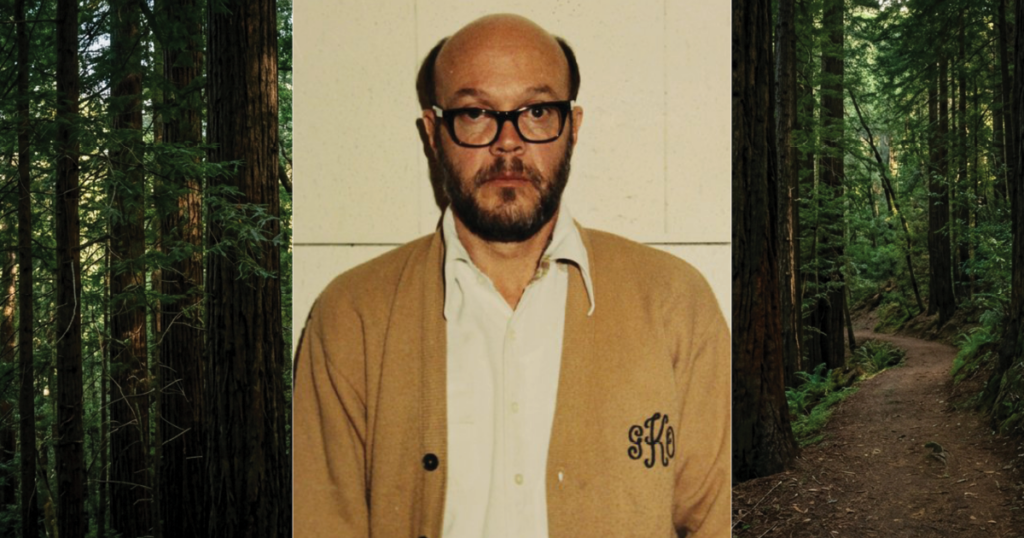
The beautiful but deadly trails of Northern California became the hunting grounds for one of the state’s most calculated predators between 1979 and 1981. David Joseph Carpenter, infamously known as the “Trailside Killer,” unleashed an era of absolute terror that paralyzed the San Francisco Bay Area. For two years, lone hikers and joggers were ambushed, assaulted, and executed along secluded wilderness paths, turning popular outdoor escapes into zones of public panic. According to historical archives on Wikipedia, Carpenter was a seasoned sex offender and violent criminal whose calculated method of operation involved concealing himself within the heavy tree lines of hiking trails in Marin and Santa Cruz counties to stalk his victims. His reign of terror eventually resulted in seven first-degree murder convictions, though modern forensic science would later prove that his body count was even higher.

The Making of a Predator: Early Life and Psychology
Understanding the emergence of the Trailside Killer requires a deep look into a textbook case study of severe developmental trauma mixed with antisocial personality disorder. As detailed on Grokipedia, Carpenter was born in San Francisco in 1930 and endured a childhood defined by relentless physical and emotional abuse at the hands of an alcoholic father and a domineering mother. This extreme domestic instability manifested in several classic behavioral red flags during his youth, including chronic bed-wetting, severe social stuttering, and early acts of animal cruelty.
His pattern of sexual deviance crystallized during his adolescence. By the age of 17, Carpenter had entered the juvenile justice system for molesting two young cousins, an offense that initiated a lifelong cycle of confinement in youth facilities and mental hospitals. Biographical records on the Criminal Minds Fandom Wiki note that despite recording an above-average IQ of 125 during subsequent prison psychiatric evaluations, multiple specialists diagnosed him as a manipulative, remorseless sociopath and a pathological liar. Even after marrying in 1955 and fathering three children, he continued to stalk women while maintaining a public facade as a printer and salesman.
Systemic Failures: A Cycle of Parole
The most tragic aspect of Carpenter’s criminal history is how repeatedly the justice system failed to permanently isolate him before his fatal spree began. In July 1960, his behavior turned overtly murderous when he lured a woman into the Presidio woods, bound her, and attacked her with a hammer and a knife. A military patrol officer caught him mid-act, prompting Carpenter to fire at the guard before being shot in return and captured. This encounter resulted in a 14-year prison sentence, during which his wife divorced him.
After serving nine years, Carpenter was released, only to unleash a rapid string of violent crimes in early 1970. In a matter of weeks, he staged a vehicular ambush to attempt the rape of a woman who narrowly escaped despite being stabbed, broke into a home to kidnap and rape another woman, held a third woman at gunpoint, and stole a vehicle to rape a fourth target. Following a failed prison breakout attempt with four other inmates, he accepted a plea bargain for kidnapping and robbery. Shockingly, in May 1979, he was paroled to a federal halfway house. This administrative classification allowed him to completely slip through local state sex offender monitoring screens. While actively scouting nature trails for targets, he blended seamlessly into society by taking computer printing courses at the California Trade School and securing a job as a typesetting instructor.
The Chronological Timeline of Trailside Terror
Carpenter adjusted his modus operandi over time to achieve absolute domination, initially using knives before transitioning to firearms. Pathologists and prosecutors later noted a chilling, sadistic psycholinguistic phenomenon during his attacks: the intense pleasure and absolute control he felt while terrorizing his victims caused his severe lifelong stutter to temporarily vanish entirely.
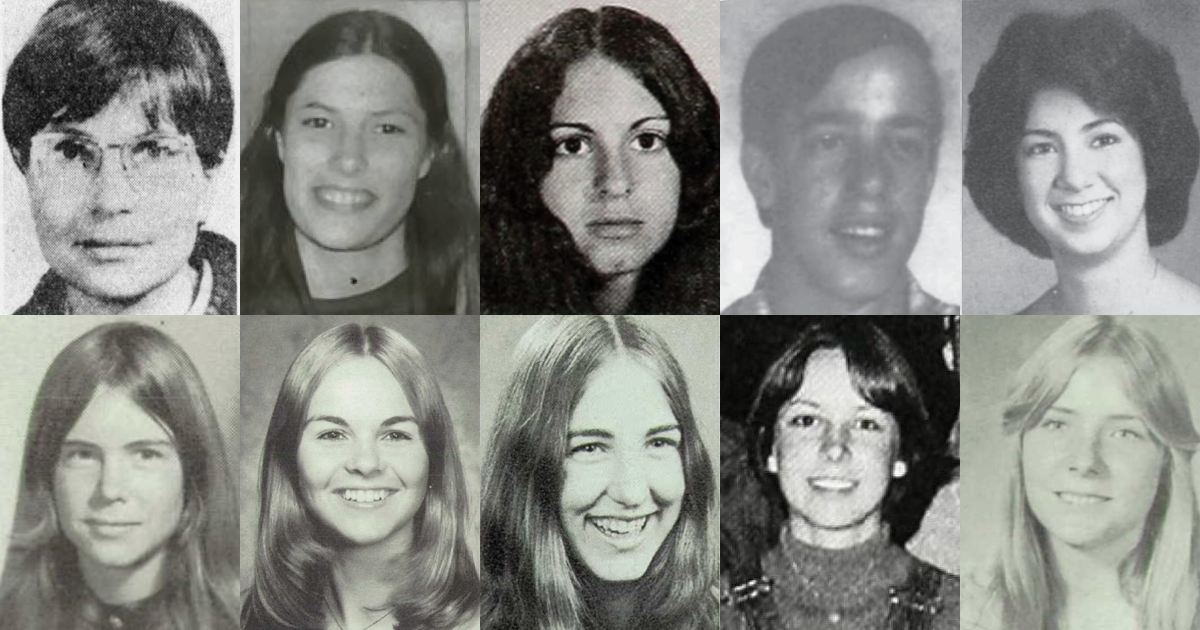
The bloodshed began in August 1979 at Mount Tamalpais State Park. Edda Kane, a 44-year-old bank employee and experienced hiker, was found dead on a secluded trail. She had been stripped of her clothing and shot execution-style in the back of the head. While a .44 caliber handgun was eventually linked to Carpenter as a prime suspect, the weapon itself was never recovered.
Two months later, in October 1979, the violence moved into the city limits of San Francisco. Mary Frances Bennett, a 23-year-old Montana State University graduate, was ambushed while jogging at Lands End. Carpenter dragged her into the bushes and attempted to assault her. Despite a fierce struggle in which Bennett managed to dislocate her attacker’s thumb, she was stabbed more than 25 times and nearly decapitated. Carpenter sought emergency room treatment that night, claiming his injury was from a dog bite. Because investigators initially lacked the physical evidence to charge him, the case went unsolved for decades. As reported by NBC Bay Area, a major forensic breakthrough occurred in 2010 when cold-case investigators submitted preserved biological evidence from the scene to the state’s offender DNA database, returning a perfect match to Carpenter. This discovery provided long-awaited answers to Bennett’s surviving family, as detailed in coverage by 6abc.
The attacks escalated rapidly into 1980. In March, 23-year-old Barbara Ann Schwartz was discovered stabbed 12 times with a butcher knife on a trail near Mount Tamalpais. Carpenter was injured during her resistance but successfully deflected local suspicion by claiming he had been the victim of a robbery. This tragedy prompted authorities to explicitly warn women against hiking alone. In October 1980, Carpenter executed a double homicide involving 19-year-old Rick Stowers and his 18-year-old fiancée, Cynthia “Cindy” Moreland. Their bodies were discovered weeks later in a remote, heavily wooded area near Point Reyes National Seashore; both had been shot in the head with a .38 caliber revolver. Just days later, Carpenter abducted, assaulted, and shot 26-year-old Anne Alderson in the head at Mount Tamalpais. In late November 1980, he claimed two more lives on the same day, raping and executing 22-year-old Diane O’Connell and 25-year-old Shauna May near Mount Tamalpais.
The final string of confirmed crimes occurred in the spring of 1981, when Carpenter shifted his geographic focus to the Santa Cruz Mountains. In March, 23-year-old Ellen Marie Hansen and her university classmate, Steven Haertle, were hiking when Carpenter confronted them. When Hansen fiercely resisted an attempted assault, Carpenter shot her to death. Haertle was shot in the neck but miraculously survived the encounter, later providing law enforcement with a critical description of a balding man in his fifties.
The Logistical Nightmare and Profiling Clash
As detailed in the extensive true-crime profile on Crime Library, the public realization that a serial killer was hunting women completely paralyzed Northern California, emptying the region’s famous hiking trails and decimating attendance at state parks. Investigators faced immense logistical nightmares because the bodies were dumped in dense brush, steep ravines, and heavily forested terrain. Many victims were not found for weeks or months, resulting in severe decomposition that destroyed trace evidence and frustrated coroners trying to establish times of death. Furthermore, friction initially fragmented the investigation across local sheriff’s departments, the SFPD, state park rangers, and the FBI, until a specialized task force centralized the data.
The breakthrough in the investigation highlighted a famous clash in early criminal profiling techniques. Local psychologists and investigators hindered their own search by assuming the killer was a young, highly athletic, and charismatic elite who could easily traverse rugged terrain. FBI profiler John Douglas countered this theory, accurately predicting that the killer would be an older, reclusive local man in his fifties with a history of severe speech impediments and a background containing the MacDonald Triad indicators.
Arrest, Prosecution, and Death Row Legacy
Carpenter’s final known victim was Heather Scaggs, a 20-year-old woman who worked with him at an offset printing trade school. In May 1981, Scaggs vanished after telling her roommates she was meeting Carpenter to buy a used car from him. Her body was later discovered in Santa Cruz County, having been assaulted and shot through the eye. This direct personal connection immediately compromised Carpenter’s cover. The multi-agency task force placed him under round-the-clock surveillance and arrested him on May 14, 1981. Investigators subsequently discovered trail maps in his vehicle and recovered the .38 caliber murder weapon from a female acquaintance whom Carpenter had deceptively manipulated into purchasing it for him earlier that year.

Due to overwhelming media coverage in Northern California, his legal proceedings were moved to Southern California. As reported by the Los Angeles Times, prosecutors detailed his terrifying psychological transformation, noting how his severe stutter vanished during his sadistic acts. Despite the defense’s efforts to challenge ballistic evidence and eyewitness testimony, Carpenter faced two separate trials. He received his first death sentence in Los Angeles County in 1984 for two murders, followed by a second death sentence in San Diego County in 1988 for five additional killings.
Decades later, a personal jailhouse interview published by the San Quentin News provided a glimpse into his life as an elderly inmate. At 83 years old, he maintained his innocence, claiming a systemic vendetta by prosecutors, while filling his days by researching legal appeals, writing letters, and listening to sports radio. Following California’s 2019 execution moratorium, his status effectively shifted to life without parole. At 96 years old, he remains incarcerated at the California Health Care Facility in Stockton, holding the grim distinction of being the oldest death row inmate in the United States.